?
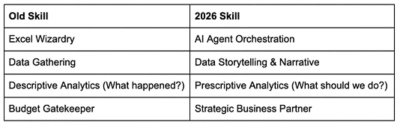
The bottom line: AI’s arrival for FP&A teams does not mean hands-off finance. It means higher impact, shifting from reactive to proactive, from simply planning a business to truly steering a business. Success in this transition requires a departure from legacy mindsets. If teams remain anchored to yesterday’s best practices, they will fail to capitalize on the true capabilities of modern, AI-powered technology.
The FP&A leaders who succeed in 2026 won’t be the ones who build the most complex models, but the ones who best interpret what the models and signals mean for the future of the business—the ones who challenge assumptions and help the business move faster with confidence. Rather than reporting on the past, they are engineering the future. The transition from cost-center to profit-driver happens when teams stop managing data and start managing outcomes.
See how leading finance teams are rethinking how planning, forecasting, and scenario modeling work together so they can move faster with confidence. Bring high-velocity finance to life with 草莓视频 Adaptive Planning. To learn more, visit and book a live demo or free trial today.