?
This episode is available as audio only on and .
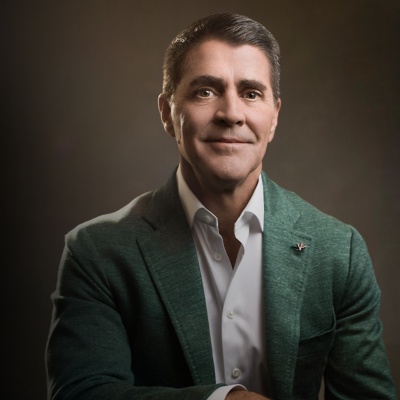
Change, according to ²ÝÝ®ÊÓÆµ CEO Carl Eschenbach, rarely announces itself. Instead, it arrives when you least expect it, demanding adaptation, evolution and a complete rethinking of established practices.?
This sentiment has never been more true than in the current moment, where the AI revolution is not just inviting us to change, but compelling us to do so at an unprecedented pace.?
Right now, we¡¯re not merely navigating the unknown, but fundamentally rethinking the very essence of work ¨C what it is, how it gets done, what skills truly matter, and how to lead effectively when machines are increasingly freeing humans up to work on higher level responsibilities.
To delve into this transformative era, Eschenbach and ²ÝÝ®ÊÓÆµ Chief People Officer (CPO) Ashley Goldsmith recently shared their insights on the Future of Work podcast with Chief Learning Officer (CLO) Chris Ernst. Their conversation offers powerful lessons for leaders navigating the profound implications of AI within their organisations.
Report
The discussion quickly turned to the tangible impact of AI on business operations, a theme that resonated deeply with both leaders given the rapid pace of technological advancements.
One thing was clear: ²ÝÝ®ÊÓÆµ isn't just talking about AI; we¡¯re living it. Eschenbach's internal challenge to functional leaders to present on AI integration reveals a critical leadership principle: true transformation starts from within, not just at the research and development (R&D) fringes. This isn't merely about adopting new tools; it's about embedding an AI-first mindset across every facet of the organisation, from sales to HR. This proactive internal embrace by ²ÝÝ®ÊÓÆµ offers a powerful blueprint for other enterprises struggling to move AI beyond pilot programmes.
"It was really, really enlightening to see in one year how much we as a company have leaned into this powerful technology, and embraced it," Eschenbach stated. This wasn't exclusive to research and development; AI adoption is now pervasive across sales, marketing, finance and people functions, and is driving tangible productivity gains.
Goldsmith echoed this sentiment, providing a compelling example from ²ÝÝ®ÊÓÆµ¡¯s people analytics team: "With AI, things that used to take days or sometimes even weeks are mere moments now. That's really transformed what that team can do with much richer research." This demonstrates AI's capacity to elevate the strategic contribution of any function, moving beyond transactional tasks to deeper, more impactful insights.
As companies across the globe grapple with effectively increasing AI adoption and literacy, it's imperative to centre humans in this effort. This requires cultivating an AI-first mindset and building unwavering trust with employees.
When asked about the biggest leadership challenge AI presents, Goldsmith immediately pinpointed mindset and trust. ¡°Big transformations like this are scary. And it can be daunting¡ But as leaders, we have an opportunity to really activate a mindset of embracing change and being open to the opportunity,¡± she says.
Eschenbach adeptly highlights a critical flaw in common AI narratives: "We talk about AI in the context of saving money and the strong ROI that it will deliver to companies because of how transformative it is. But if we stop there, that immediately puts the trust at risk between employees and the company, because immediately the employees are like, wow, is my job going away?"
This resistance to change is amplified when conversations about AI in the workplace prioritise cost savings over human impact, eroding trust.
Instead, Eschenbach offers a different perspective: "The key narrative is, what do we do with those savings? What do we do with those dollars? And how do we reinvest it in two things: in the people and transforming skills, and then how do we invest it in the business?" This human-centric approach strikes a balance between focusing on growth for the business and reinvestment in people.
With AI, we don¡¯t have to choose between growth and people anymore. We can elevate human potential, while also growing trust with employees and growing the business. Everybody wins.
The rise of AI isn't just reshaping tasks; it's fundamentally redefining leadership itself. Leaders must now navigate an increasingly augmented workforce, where human capabilities are enhanced by intelligent agents.
The conversation also touched on the evolving nature of leadership in a world where humans increasingly delegate manual tasks to AI.
Goldsmith acknowledged the unprecedented shift, noting that leading humans and agents is a new frontier for CPOs. ²ÝÝ®ÊÓÆµ's proactive integration of AI offered her an invaluable "sneak peek" into this augmented future.
Eschenbach added "Even as we go through this massive transformation¡we have to put humans first. And we have to do it in an ethical and responsible way."
"Technology is incredibly powerful... But technology only enables change. It takes humans to implement it, support it and leverage it. It's always going to come back to humans, even if there's a massive technology shift like we're going through," he explained.
²ÝÝ®ÊÓÆµ's approach to AI adoption within its own workforce offers valuable lessons for any leader. Goldsmith emphasised that it¡¯s not just about simply rolling out tools and hoping for adoption ¨C it¡¯s about intention.
So many organisations rush to implement new technologies, but the real power lies in its methodical foundation. Goldsmith¡¯s personal experience leading this effort lends itself to three critical areas:
Goldsmith¡¯s team grounded its AI adoption strategy in research to better understand Workmate concerns and motivations. The research revealed that high performers are most likely to leverage AI. And those using AI report higher sentiment about their career growth. Not only are they embracing AI ¨C they¡¯re harnessing its power to enhance their career trajectory.
Eschenbach added "I think this is an opportunity to relieve that stress and give people time back to go work on those tasks that are going to drive growth, go work on those tasks that are much more productive, and let AI work on our behalf."
The true power of AI, he suggested, will be when AI operates autonomously behind the scenes, freeing humans for more growth-oriented and meaningful work. There is ample power in the potential of agentic AI.
"I think this is an opportunity to relieve that stress and give people time back to go work on those tasks that are going to drive growth, go work on those tasks that are much more productive, and let AI work on our behalf."
While the spotlight often falls on technical skills in the reskilling revolution, Goldsmith champions the enduring value of human skills.
She argued that "human skills are ones that are really going to be standout and where we really differentiate. They¡¯re ones that, frankly, we need to invest in a different way than we have in the past." These durable and transferable human skills, she noted, are essential for navigating any job, role or organisation. And as AI will lower barriers to entry for certain technical skills, it can¡¯t replicate the presence of human characteristics.
Eschenbach wholeheartedly agreed, emphasising the need to bring back leadership, collaboration and networking skills, particularly in an increasingly remote or hybrid work environment. "This is not an 'or' ¨C do we need technical skills or human skills? It's an 'and'," Eschenbach asserted.
In this era of unprecedented transformation, the strategic alliance between the CEO and CHRO has never been more vital. Their unified vision is essential for steering organisations through the complexities of technological shifts and workforce evolution.
Goldsmith stated, "In this period of incredible transformation, our partnership has been more important than ever because we are guiding a business and a group of 20,000 humans through a massive amount of change."
Eschenbach echoed this sentiment, highlighting the CHRO¡¯s unique position as a conduit for understanding the pulse of the organisation.
Furthermore, Eschenbach anticipates a "step function change" in the critical role of HR leaders going forward. He sees the CHRO defining "what the future of work looks like" and "how you're going to get there." This signifies a fundamental shift in perception, recognising the people function as central to technological and organisational transformation.

Peering five years into the future, Eschenbach offered a realistic assessment: "For the companies out there today, if they don't embrace AI or continue this evolution in their companies through the use of AI, their relevancy will no longer exist in the future."
Goldsmith expressed immense optimism, seeing a promising and exciting future. She foresees opportunities to enhance human capabilities and enrich both work and life experiences. Her vision for the future is one with "an elevated society, business and workforce."
The insights shared by Eschenbach and Goldsmith made one thing clear: The AI revolution is not just a technological challenge, but a profound opportunity to redefine work, empower our workforce and elevate human potential.
By prioritising mindset shifts, fostering trust, investing in human skills and recognising the critical role of the people function, leaders can confidently steer their organisations through this transformative period and shape a truly human-centric future of work.
Ninety-eight per cent of CEOs foresee an immediate business benefit from implementing AI. to discover the potential positive impact on your company, with insights from 2,355 global leaders.
Report